 Birch Bay Siding
 Storm Damage Roof Repair for Bellingham Homes
Bellingham sits close enough to the water that every roof in the area answers to the same weather pattern: wind off the Strait of Georgia and the Salish Sea, long stretches of driving rain through fall and winter, and a moss season that never really ends. When a storm rolls through and knocks loose shingles, lifts flashing, or drives water under a seam, the damage rarely announces itself with a hole in the ceiling. More often it shows up months later as a stain, a soft spot in the decking, or a spike in the heating bill. Storm damage roof repair in this part of Whatcom County isn't just about patching what's obviously broken — it's about finding what the storm loosened before the next one finds it for you.
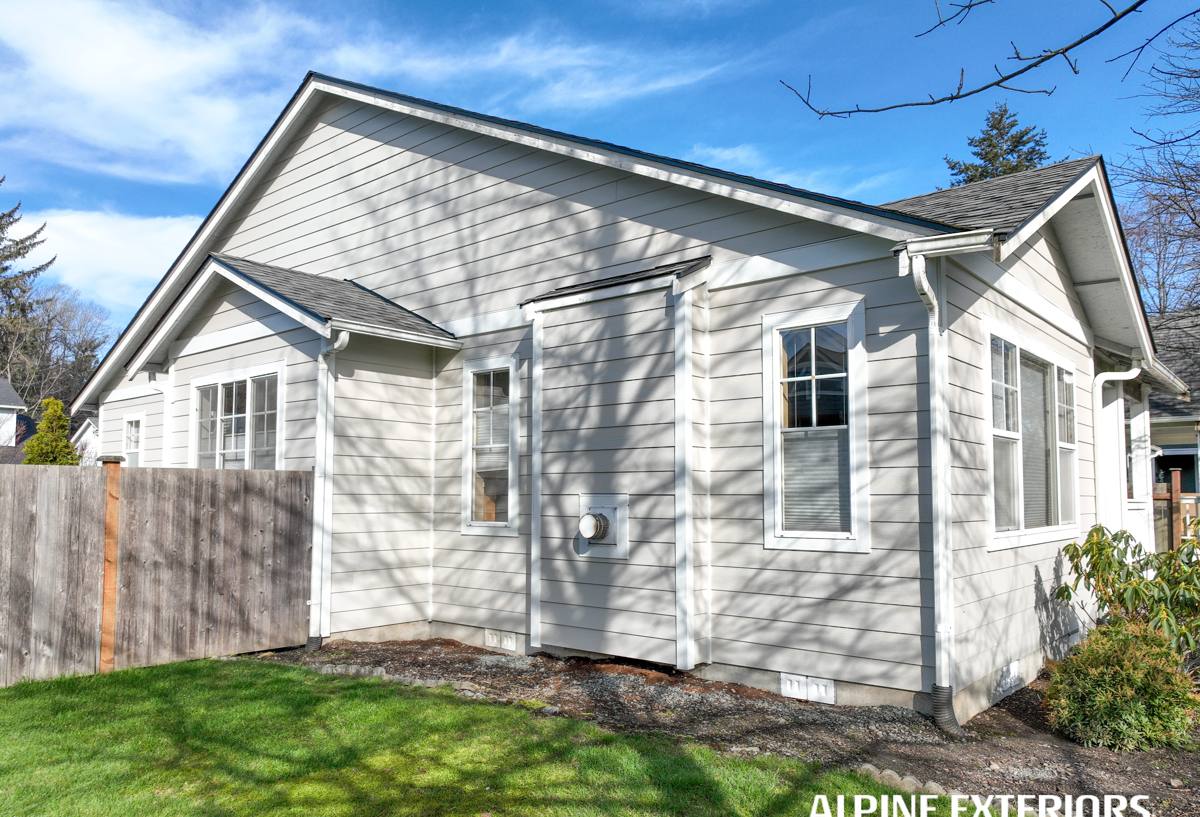
Why Bellingham Roofs Take a Different Kind of Beating
A roof in a dry inland climate deals mostly with sun and occasional hail. A Bellingham roof deals with something more relentless: near-constant moisture cycling combined with salt-laden air moving in off the water. That combination does a few specific things to roofing materials over time.
- Salt air accelerates corrosion on exposed fasteners, flashing, and metal roof panels faster than manufacturers' inland warranty testing accounts for.
- Driving, wind-blown rain gets pushed sideways into laps, valleys, and vent penetrations that were only ever designed to shed water moving straight down.
- Extended damp periods keep moss and algae established year-round, and moss holds moisture directly against shingle granules and wood decking.
- Wind gusts off open water can lift shingle tabs and ridge caps without tearing them off outright, leaving a roof that looks intact from the ground but is no longer sealed.
None of this means a roof is destined to fail — it means storm damage here needs to be evaluated by someone who knows what a wind-loosened seal looks like versus what's just cosmetic weathering.
What Actually Counts as Storm Damage
Homeowners often assume storm damage means missing shingles or a visible tear. In practice, most of the repair calls we handle after a windstorm or heavy rain event in the Bellingham area involve damage that's easy to miss:
Wind-related damage
Lifted or creased shingle tabs, broken sealant strips, torn ridge cap, and displaced flashing around chimneys and skylights. Wind doesn't have to remove material to cause a leak — it just has to break the seal.
Rain-driven damage
Water intrusion at valleys, step flashing, and vent boots where wind-driven rain overwhelmed a marginal seal that would have held fine in a straight-down rain.
Debris impact
Branch strikes and wind-carried debris that puncture shingles, dent metal roofing, or crack tile — common where mature trees overhang a roofline, which describes a lot of Whatcom County properties.
Compounding moisture damage
Storm damage that opened a small gap, followed by weeks of our normal rainy pattern, turning a minor repair into wet decking, insulation, or framing if it sits too long before anyone notices.
Our Storm Damage Repair Process
We work storm calls the same methodical way every time, because rushing a repair on a wet roof is how small problems become expensive ones.
- Inspection and documentation. We walk the roof (or use a pole camera on steep or unsafe sections) and photograph every point of damage, including anything that's storm-related but not yet leaking. This documentation matters as much for insurance as for the repair plan itself.
- Temporary protection. If there's active or likely water intrusion, we tarp or seal the affected area the same visit. A roof left exposed for days while paperwork gets sorted out is how a repair job turns into a full deck replacement.
- Damage assessment and scope. We separate what's genuinely storm-caused from pre-existing wear — an honest distinction, since insurance coverage usually hinges on it.
- Repair or replace recommendation. We give a straight answer on whether a section repair will hold or whether the damage (or the roof's remaining life) points toward a larger replacement, and we explain why either way.
- Insurance coordination. When a claim is involved, we provide the documentation and scope adjusters need, and we're available to walk the roof with them if requested.
- Repair execution. Matching materials as closely as possible, re-flashing rather than just re-sealing where flashing was compromised, and checking adjacent areas the storm may have also loosened.
Common Storm Damage Types We See in This Area
| Damage Type | Typical Cause Locally | Warning Sign | Urgency |
|---|---|---|---|
| Lifted shingle tabs | Gusting wind off open water | Visible gaps, tabs flapping in wind | Address before next rain event |
| Flashing separation | Wind flex plus corrosion from salt air | Rust streaks, gaps at chimney/skylight edges | High — direct leak path |
| Moss-related granule loss | Extended wet season, shaded roof sections | Bald patches, granules in gutters | Moderate — accelerates wear |
| Valley erosion | Concentrated wind-driven rain volume | Staining below valley, worn shingle edges | High — highest water volume point on roof |
| Vent boot cracking | UV and moisture cycling, then storm flex | Cracked rubber collar around pipe vents | Moderate to high depending on crack size |
Repair vs. Replace: What Actually Drives the Decision
Not every storm-damaged roof needs to come off. The honest factors that push a decision one way or the other are usually these:
| Factor | Favors Repair | Favors Replacement |
|---|---|---|
| Roof age | Under roughly half its expected service life | Already near or past expected lifespan |
| Extent of damage | Isolated to one section or slope | Spread across multiple slopes or systemic |
| Underlying decking condition | Dry, sound plywood or boards | Soft spots, rot, or repeated past leaks |
| Material availability | Close match to existing shingle/panel still made | Discontinued product, visible mismatch unavoidable |
| Insurance scope | Claim approved for repair only | Claim scoped for full replacement |
We'll tell you plainly which category your roof falls into rather than defaulting to the more expensive answer.
Moss, Moisture, and the Long Wet Season
Whatcom County's wet season runs long, and a storm-damaged roof that isn't fully sealed heads into that season at a disadvantage. Moss doesn't just sit on top of shingles — it holds water directly against the granule layer and, on older roofs, against the decking underneath once granule loss exposes the mat. A section that lost its seal in a windstorm and then sits through weeks of steady rain and moss regrowth ages faster than the rest of the roof. Part of a proper storm repair is treating and clearing moss from the repaired area and the sections around it, not just patching the damage itself, so the fix doesn't get undermined by the same conditions that are already working on the rest of the roof.
Materials We Use for Storm Repairs
For repair work, matching the existing roofing system as closely as possible matters more than defaulting to whatever's on the truck. We select materials based on what actually holds up to this coastline's conditions rather than what's cheapest to source:
- Corrosion-resistant flashing and fasteners rated for coastal, salt-air exposure rather than standard inland-grade hardware.
- Shingle or panel matches sourced to the closest available profile and color, since a mismatched patch weathers unevenly and stands out over time.
- Self-adhering underlayment at valleys and vulnerable transitions, which performs better under wind-driven rain than standard felt alone.
- Sealants and adhesives rated for cold, wet application windows — a real consideration here, since storm repairs often can't wait for a dry summer week.
What To Do Right After a Storm
How a homeowner handles the first 24–48 hours after storm damage affects both the repair cost and, often, the insurance outcome.
- Photograph visible damage from the ground before anything is moved, tarped, or cleaned up.
- Check attic or ceiling areas below any visible roof damage for staining, even if nothing is dripping yet.
- Avoid walking a wet or storm-damaged roof yourself — loosened shingles and soft decking are a real fall risk.
- Call for a tarp or temporary seal quickly if there's any sign of active leaking; delay is the single biggest driver of secondary damage.
- Hold off on full cleanup until damage is documented, in case an insurance claim is involved.
- Get an inspection even if nothing looks obviously wrong — wind can unseal a roof without visibly damaging it.
Why a Crew That Already Works Bellingham Matters
Storm repair isn't a generic skill applied the same way everywhere. A crew that regularly works roofs in and around Bellingham already knows which flashing details tend to fail first in this wind pattern, how aggressive the moss growth gets on north-facing slopes here, and what a genuinely storm-damaged seal looks like versus ordinary weathering from the salt air. That local pattern recognition is what keeps a repair from becoming a return visit six months later. It also means faster response — when a windstorm moves through Whatcom County, everyone with a damaged roof is calling roofers at the same time, and being local to the area means we're not driving in from across the region to get a tarp up.
If your roof has been through recent weather and something doesn't look quite right — or even if you just want a second set of eyes after a windstorm — we're happy to take a look. Reach out for a free, no-pressure estimate using the form below.