 Birch Bay Siding
 Why Cherry Point Roofs Age Differently Than Roofs Inland
Homes along the Cherry Point shoreline near Birch Bay sit in one of the more demanding roofing environments in Whatcom County. You've got salt-laden air coming off the Strait of Georgia, wind-driven rain that hits roof planes sideways instead of falling straight down, and a wet season that stretches long enough for moss and moisture to do real damage before anyone notices. None of these factors are dramatic on their own. Together, over years, they shorten the useful life of a roof that would last longer thirty miles inland.
Salt air is corrosive to exposed metal — fasteners, flashing, vent stacks, gutter hardware. Driving rain finds gaps that would never leak in a calm, straight-down rainstorm, which is why flashing detail and underlayment quality matter more here than the shingle brand printed on the wrapper. And moss doesn't just look bad. It holds moisture against the roof surface, lifts shingle edges, and works its way under laps where water has no business being.
A roof replacement done for a Cherry Point home needs to account for all three. A crew that treats this like a standard inland re-roof is setting the homeowner up for problems in five years instead of twenty-five.
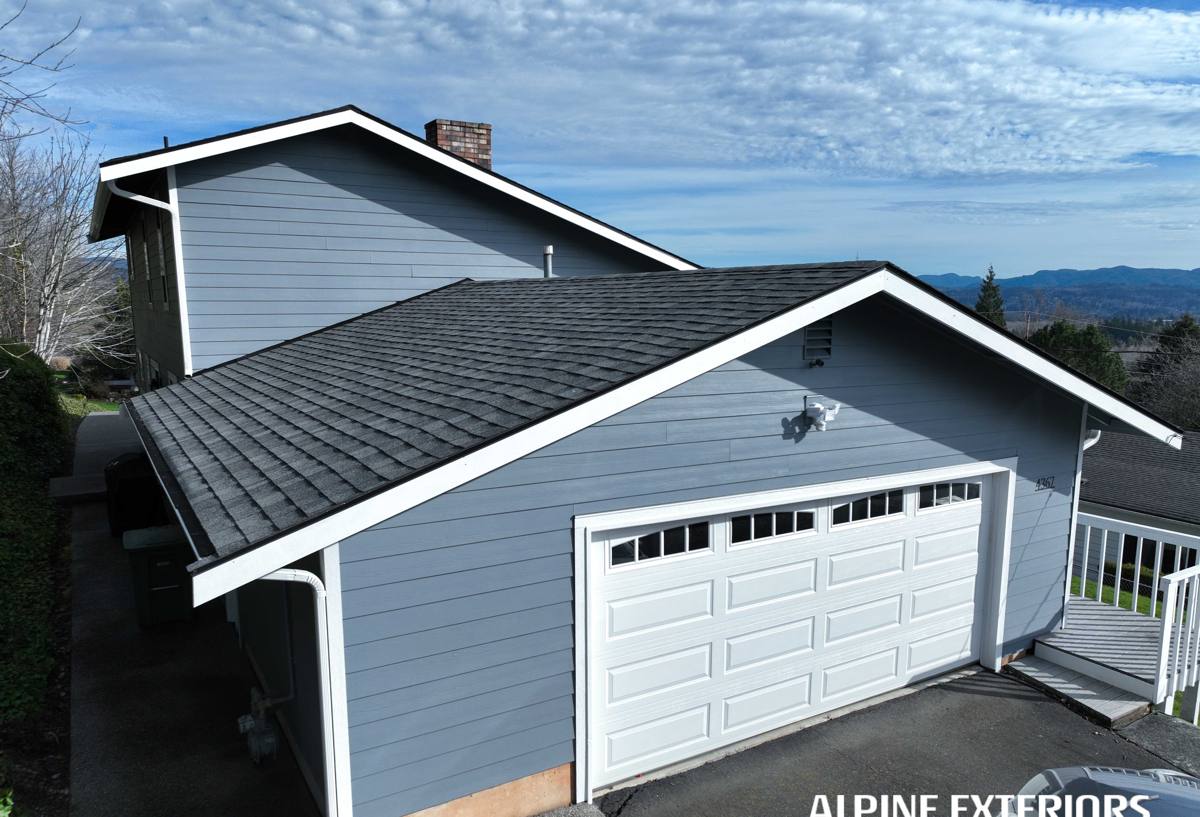
Signs a Cherry Point Roof Needs Replacement, Not Another Repair
Repairs make sense when the damage is localized and the rest of the roof still has life left. Replacement makes sense once the roof as a system — deck, underlayment, flashing, and covering — is compromised in more than one place. Common signs we see on homes in this area include:
- Granule loss heavy enough that you can see bare, shiny patches on south- and west-facing slopes
- Moss buildup that's spread beyond the ridge and ties into shaded valleys or north-facing slopes
- Soft or spongy decking felt underfoot during inspection, especially near eaves and valleys
- Rusting or pitted flashing around chimneys, vents, and skylights from years of salt exposure
- Shingles curling, cupping, or losing their seal — a sign the roof has taken more wind and moisture cycling than it was built for
- Interior staining on ceilings or in the attic after wind-driven rain events
If you're seeing two or more of these at once, patch repairs usually buy a year or two at best. A full replacement lets us fix the underlying causes instead of chasing symptoms.
What a Correct Roof Replacement Actually Involves
Full Tear-Off and Deck Inspection
We don't install new roofing over old. A full tear-off lets us see the actual condition of the roof deck — something you can't judge from the ground or even from the attic. Any soft, delaminated, or water-damaged sheathing gets replaced before anything new goes down. Skipping this step is the single most common shortcut that leads to premature failure on coastal homes.
Underlayment Built for Wind-Driven Rain
Standard felt underlayment is fine in a lot of the country. It's not the right call for a home exposed to Strait of Georgia weather. We use synthetic underlayment with self-adhering ice-and-water membrane in the vulnerable zones — eaves, valleys, and around every penetration — because those are exactly the spots where sideways rain gets pushed under shingles by wind pressure.
Flashing That Won't Corrode in Salt Air
Flashing is where most roof leaks actually start, not in the field of the roof. For Cherry Point homes we pay close attention to material choice here — corrosion-resistant metals and properly lapped, sealed details around chimneys, skylights, plumbing vents, and wall intersections. Cheap or reused flashing is a false economy this close to the water.
Ventilation That Fights Moss and Moisture
A roof that can't breathe traps moisture underneath it, which accelerates moss growth and rot from the inside out. Balanced intake and exhaust ventilation keeps the deck drier and the attic space from becoming a humidity trap during our long wet stretches.
Material Options for a Salt Air, High-Moss Environment
There's no single "best" roofing material for every home — it depends on budget, roof pitch, and how much long-term maintenance a homeowner wants to take on. Here's how the common options actually perform in Cherry Point conditions.
| Material | Salt Air Resistance | Moss Resistance | Maintenance Burden |
|---|---|---|---|
| Architectural asphalt shingle (algae-resistant) | Good, with corrosion-resistant fasteners and flashing | Improved with copper or zinc granules, still needs periodic cleaning | Moderate — periodic moss treatment recommended |
| Standard 3-tab asphalt shingle | Fair — shorter lifespan in coastal exposure | Low resistance without treatment | Higher over the roof's life |
| Standing seam metal | Very good with coastal-rated coatings and fasteners | Excellent — moss struggles to hold on a smooth metal surface | Low, but higher upfront cost |
| Wood shake | Requires diligent upkeep near salt air | Poor without regular treatment — retains moisture | High — not something we generally recommend this close to the water |
We steer most Cherry Point homeowners toward algae-resistant architectural shingles or standing seam metal, depending on budget and the look they want for the home. Wood shake can be a beautiful roof, but the maintenance schedule needed to keep it healthy in this climate is a real, ongoing commitment — we'll tell you that honestly rather than sell you a product that fights the environment it's in.
What Drives the Cost of a Cherry Point Roof Replacement
Every roof is priced on its own specifics, but the factors that move the number up or down are consistent. Knowing them ahead of time makes for a more useful estimate conversation.
| Factor | Why It Matters |
|---|---|
| Roof size and number of planes | More cuts, valleys, and hips mean more labor and material waste |
| Deck condition | Rot or soft sheathing found at tear-off adds repair cost most homeowners don't budget for upfront |
| Material choice | Shingle grade or metal roofing changes both material and installation cost significantly |
| Roof pitch and access | Steep or hard-to-access roofs take longer and require more safety setup |
| Ventilation and flashing upgrades | Bringing an older roof system up to current standards is worth the modest added cost |
| Number of penetrations | Chimneys, skylights, and vents each need individual flashing detail |
Broadly, homeowners in this area should expect a range that reflects mid-to-upper coastal Pacific Northwest pricing rather than national averages — we'll give you an exact number after walking the roof, not a phone-quote guess.
Our Process, Start to Finish
We keep the process straightforward because a roof replacement is disruptive enough without added confusion:
- On-site inspection and honest assessment of whether repair or replacement is the right call
- Written estimate that breaks down material, labor, and any deck repair contingencies
- Scheduling around Whatcom County's weather windows to avoid tearing off a roof ahead of a storm system
- Full tear-off, deck inspection and repair, new underlayment, flashing, and covering installation
- Site cleanup, including magnetic sweep for nails and debris removal
- Final walkthrough so you can see the completed work before we consider the job done
Why Local Experience in Cherry Point Matters
A roof replacement isn't just about installing a product correctly — it's about knowing how that product will hold up against the specific conditions of this stretch of coastline. Crews that work Cherry Point and Birch Bay regularly know which flashing details fail first in this salt air, which north-facing slopes hold moss longest, and how local wind patterns push rain into places a generic installation guide won't anticipate. That knowledge shows up in the details you don't see once the roof is finished — the fastener choice, the flashing lap direction, the underlayment coverage at the eaves.
It also matters for permitting and code familiarity specific to Whatcom County, so the job goes smoothly without surprises partway through.
Protecting Your Investment After Replacement
A correctly installed roof still benefits from basic seasonal attention, especially in a moss-prone, salt-air environment. A simple maintenance routine goes a long way:
- Have moss and debris cleared from the roof and gutters at least once a year, more often under overhanging trees
- Keep gutters and downspouts clear so water isn't backing up under the roof edge
- Trim back tree limbs that keep sections of the roof shaded and damp
- Have flashing and fasteners visually checked every couple of years given the corrosive coastal air
- Address small leaks or lifted shingles right away rather than waiting for the next dry season
None of this requires a major time commitment, but skipping it is how a well-installed roof loses years off its expected lifespan.
Get a Straight Answer About Your Roof
If you're seeing moss buildup, granule loss, or signs of wear on a Cherry Point home, it's worth getting an honest, no-pressure look before deciding between repair and replacement. We'll walk the roof, tell you what we actually find, and put together a clear estimate — no upsell, no scare tactics. Reach out using the form below to schedule a free estimate.