 Birch Bay Siding
 Roof Repair in Sandy Point: Built for This Stretch of Coastline
Sandy Point sits right on the water along Whatcom County's coastline near Birch Bay, and that waterfront position shapes almost everything about how a roof ages here. Homes in Sandy Point take a steadier dose of salt-laden air, more wind-driven rain, and a longer moss season than houses set further inland, and a roof that isn't repaired with those conditions specifically in mind tends to fail again in the same spot within a year or two. We work this stretch of coastline regularly, and roof repair here is a large part of what we do — not as a side service tacked onto full replacements, but as its own careful trade that requires knowing exactly how this climate finds its way into a roof.
Birch Bay Siding Company handles roofing, siding, windows, and decks, and we treat the roof as the exterior component that takes the most direct, sustained abuse from this coastal climate. This page is specifically about roof repair for Sandy Point homes — what the local conditions demand, what a correct repair actually involves, and why it matters to hire a crew that already understands this particular stretch of water instead of a general contractor working here for the first time.
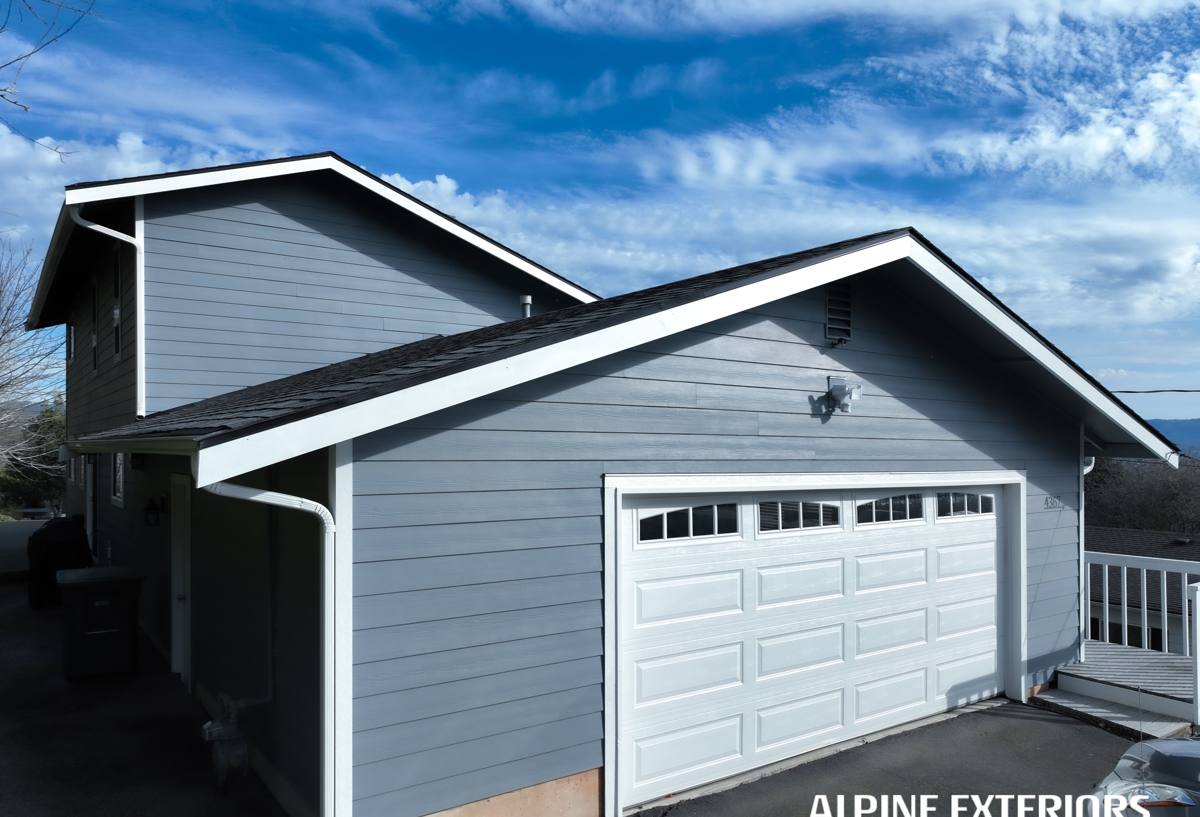
What Salt Air, Driving Rain, and Moss Do to a Sandy Point Roof
Salt Air Off the Water
Homes this close to the water take on a steady, low-level dose of salt in the air, and that salt does real work on a roof over time. It accelerates corrosion on exposed fasteners, flashing, and any metal roofing components, and it breaks down lower-grade sealants and coatings faster than they'd wear in a drier, inland location. A repair that uses standard hardware instead of corrosion-resistant fasteners might hold for a season or two before the fastener heads start rusting and losing their grip on the roofing material underneath.
Driving, Wind-Driven Rain
Storms coming off the water in Sandy Point rarely drop rain straight down. Wind pushes it sideways and even upward under shingle tabs, around vent pipes, and into roof valleys and roof-to-wall transitions where flashing does the real work of keeping water out. That sideways-driven moisture load is harder on a roof than the same rainfall total would be in a calm climate, and it's exactly the kind of water that finds any gap a rushed or incomplete repair leaves behind.
A Long Moss Season
Mild, damp conditions for much of the year mean moss and algae have a long growing season on any roof surface that stays shaded or doesn't dry out quickly — north-facing slopes, roof valleys, and areas under tree cover. Moss holds moisture against the roofing material and works its way under shingle edges and around flashing, which means a repair on a moss-affected roof isn't complete until the moss itself is addressed, not just the leak it eventually caused.
The Roof Repair Problems We See Most Often in Sandy Point
Some issues show up on Sandy Point roofs more consistently than they do further inland, simply because of the direct water exposure and salt air. The most common calls we get here include:
- Lifted or missing shingles after a windstorm, especially on roof planes that face the water directly
- Failed flashing at chimneys, vent pipes, skylights, and roof-to-wall transitions, often where sealant has dried out and cracked from sun and salt exposure
- Moss-related damage where sustained moisture under moss growth has lifted shingle edges or degraded the roofing surface
- Corroded fasteners and metal components that have lost holding power well before the roofing material itself was due for replacement
- Clogged or damaged gutters and downspouts that back water up under the roof edge instead of carrying it away
- Soft or damaged roof decking discovered under a leak that had been finding its way in slowly for longer than anyone realized
Most of these start small and stay small if they're caught early. Left through another wet season, several of them turn into decking damage that costs a lot more to put right than the original leak would have.
Repair or Replace? Reading Your Roof Honestly
Not every roofing problem on a Sandy Point home calls for full replacement, and we don't default to recommending one just because a roof is getting older. The right call depends on a handful of specific factors, and we walk through them with you before recommending either path.
| Factor | Leans Toward Repair | Leans Toward Replacement |
|---|---|---|
| Age of existing roof | Roof is well within its rated service life | Roof is at or near the end of its expected lifespan |
| Extent of the problem | Damage is localized to one area or slope | Damage is spread across multiple slopes or roof planes |
| Decking condition | Deck underneath is solid and dry | Deck shows soft spots or moisture damage in multiple areas |
| Repair history | First or second repair on this roof | Roof has already had several repairs in the same areas |
| Moss and salt exposure | Minor surface growth, easily addressed | Long-term moss damage affecting shingle integrity broadly |
A localized leak on a roof that's otherwise sound is almost always a straightforward repair. A roof nearing the end of its rated life, with moisture damage in the decking or a long history of patch jobs in the same spots, is usually addressed more honestly with a full replacement rather than another round of short-term patchwork. We'll explain what we actually find on your roof and why, rather than steering toward whichever option happens to be more profitable for us.
What a Correct Roof Repair Actually Involves
Diagnosing the Real Source, Not Just the Visible Leak
Water rarely shows up inside a house directly below where it entered the roof — it travels along the underlayment, decking, or framing before finding a gap to drip through. A repair that just patches the spot above the interior stain, without tracing the water back to its actual entry point, tends to leave the real problem in place. We start every repair by finding where the water is actually getting in, which sometimes means checking flashing, valleys, or vent penetrations well away from where the damage first appeared inside the home.
Matching Materials and Fasteners to the Existing Roof
A repair that uses the wrong shingle profile, an incompatible underlayment, or standard fasteners on a coastal roof can end up looking mismatched and performing worse than the surrounding roofing. We match materials to what's already on the roof where possible, and on a Sandy Point home we use corrosion-resistant fasteners and flashing as standard practice, not as an upsell, because standard hardware corrodes faster this close to the water.
Flashing and Detail Work
The majority of roof leaks we trace back to their source start at flashing, not at the shingles themselves. Chimney flashing, vent boot seals, valley metal, and roof-to-wall transitions all need to be properly lapped, sealed, and integrated with the surrounding roofing so water sheds downward and outward instead of finding a path underneath. This detail work takes longer than a quick sealant patch, but it's the difference between a repair that lasts and one that calls us back out in a year.
Our Roof Repair Process in Sandy Point
- Inspection and diagnosis: We look at the roof surface, flashing, valleys, and — where accessible — the attic or roof deck from underneath, to trace the actual source of the problem rather than assuming based on where the damage shows up inside.
- Honest assessment: We explain what we found, what's driving it, and whether a repair or a broader fix makes more sense given the roof's age and condition.
- Written scope and estimate: Before any work starts, you get a clear description of what's being repaired and how, not a vague line item.
- The repair itself: Damaged materials are removed back to sound decking and roofing, flashing and underlayment are correctly integrated with the surrounding roof, and corrosion-resistant fasteners and hardware are used throughout.
- Final check: We confirm the repair sheds water correctly and blends properly with the surrounding roofing before we consider the job finished.
Signs Your Sandy Point Roof Needs Repair Now
A quick self-check from the ground or attic can catch problems early, before a wet season turns a minor repair into a major one:
- Water staining on ceilings or walls near an exterior wall, chimney, or skylight
- Moss buildup on shaded slopes or in valleys that keeps returning after cleaning
- Shingles that look curled, cupped, cracked, or are visibly missing after a storm
- Granules collecting in gutters or at the base of downspouts
- Flashing around chimneys or vents that looks lifted, rusted, or has cracked sealant
- Daylight visible through the roof deck when viewed from inside the attic
- A musty smell or visible mold in the attic, which often points to a slow, ongoing leak
Any single item on that list is worth a professional look. Several of them together, especially heading into the wetter months, are worth addressing before the next storm rather than after it.
Why a Crew That Already Works Sandy Point Matters
A contractor who already works this stretch of coastline has seen how salt air, driving rain, and moss actually behave on real roofs here over multiple seasons, not just how a product performs on a manufacturer's data sheet. That experience shows up in practical decisions during a repair: which roof orientations in Sandy Point need extra attention because of direct water exposure, how much a given valley or flashing detail actually needs relative to a similar-looking roof further inland, and which shortcuts to avoid because we've already seen what they turn into a couple of winters later. It also means fewer surprises and fewer callbacks, because the repair was built for the conditions this specific roof actually faces rather than a generic set of assumptions.
Beyond the Roof Repair
A roof repair sometimes uncovers related issues nearby — moisture damage at a roof-to-wall transition, aging trim, or siding that's taken on water where flashing has failed. We handle siding, windows, and decks in addition to roofing, so if a repair turns up something beyond the roof itself, we can address it as part of the same conversation instead of sending you to track down a second contractor. On siding specifically, we install James Hardie fiber cement as our standard, chosen for how it holds up against the same sustained moisture and salt exposure that drives most of the roof repairs we do out here.
If your Sandy Point roof has a leak, storm damage, or you've just noticed something that doesn't look right, we're glad to take a look and give you a straightforward, honest read on what it actually needs. Reach out using the form below for a free, no-pressure estimate.