 Birch Bay Siding
 Board & Batten Siding for Marietta Homes
Marietta sits close enough to the water that every exterior material on a house has to earn its keep. Board and batten siding — wide vertical panels with narrow strips covering the seams — has a strong, clean look that suits the mix of cabins, remodels, and newer builds you'll find in this part of Birch Bay. But the style only holds up if the materials underneath it are chosen and installed with the local climate in mind. We install board and batten siding for Marietta homeowners using James Hardie fiber cement exclusively, and this page walks through what that actually means in practice — not just the look, but the moisture management, the fastening, and the maintenance reality that comes with living this close to Birch Bay Bay and the Strait of Georgia.
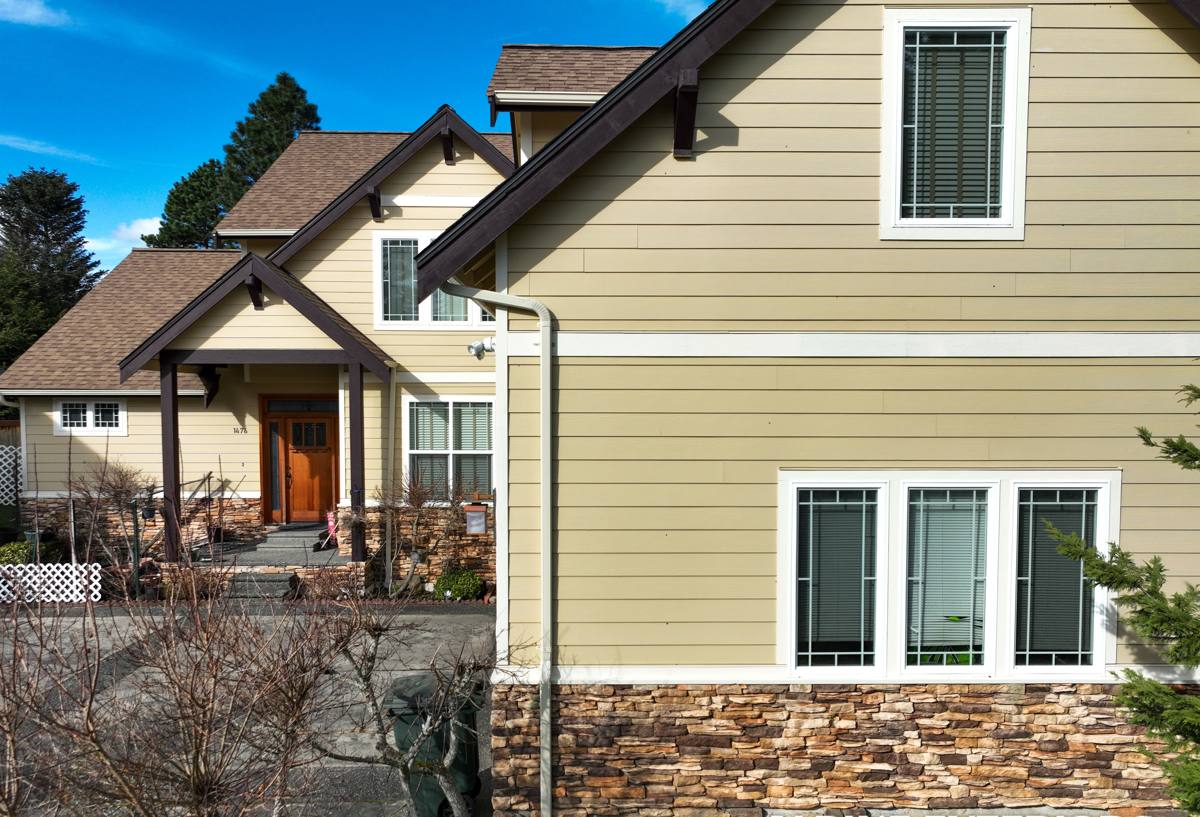
What Whatcom County's Coastal Climate Does to Vertical Siding
Board and batten has more vertical seams and more exposed trim edges than standard lap siding, which means more places for water to test the installation. In Marietta, that installation has to stand up to three things at once, year after year:
- Salt air: Proximity to the water means airborne salt settles on siding, trim, and fasteners. Over time it accelerates corrosion on the wrong hardware and breaks down finishes that weren't built for a marine-influenced environment.
- Driving rain: Whatcom County storms don't just fall straight down — wind-driven rain gets pushed sideways into vertical seams, batten edges, and butt joints. A board and batten system with weak flashing or caulk-dependent seams will eventually let that moisture in.
- A long moss season: Cool, damp, and shaded conditions for much of the year give moss and algae plenty of time to establish on north-facing and tree-shaded walls. Once organic growth takes hold on a porous or poorly finished surface, it holds moisture against the siding instead of shedding it.
None of these are exotic problems — they're the same forces every home in Birch Bay deals with. The difference is that board and batten's vertical seams and trim-heavy look make sloppy detailing more visible and more consequential than it would be on a simpler lap profile.
Why Material Choice Matters More on This Profile
Board and batten is often installed in engineered wood, vinyl, or fiber cement. We only install James Hardie fiber cement, and on this particular style the reasons are more pronounced than on a standard siding job:
| Factor | Engineered Wood / Vinyl Board & Batten | James Hardie Fiber Cement |
|---|---|---|
| Moisture behavior at seams | Wood-based products can swell or delaminate if water reaches the substrate through a seam; vinyl relies on lap-and-gap joints that can rattle or gap over time | Non-combustible cement composite resists moisture intrusion at the core; engineered to be installed with proper flashing and rainscreen detailing |
| Salt air / coastal exposure | Variable — depends heavily on coating quality and how well seams are sealed | Formulated and tested for demanding climate exposure, including coastal conditions |
| Moss and algae resistance | Porous or textured surfaces on some products can hold moisture and organic growth longer | Dense fiber cement surface with factory ColorPlus finish sheds moisture better and resists the substrate breakdown that feeds growth |
| Fire exposure | Wood-based products are combustible; vinyl can deform under heat | Non-combustible material, a real consideration during dry-season wildfire smoke and ember exposure |
| Long-term finish | Field-applied or lower-grade factory finishes often need repainting within 5-10 years | Factory-baked ColorPlus finish is warrantied and holds color far longer than field-applied paint |
We're not going to tell you engineered wood or vinyl board and batten is worthless — plenty of homes have it and it can look fine for years if it's maintained closely. But we've made a professional decision to standardize on one product system we can install to spec and stand behind, and for a coastal Whatcom County property, fiber cement is the one that holds up with the least maintenance headache.
The James Hardie Board & Batten System
Hardie's board and batten look is typically built from vertical fiber cement panels — often HardiePanel or a shiplap/reveal panel — combined with Hardie trim battens at the seams, or from individual HardieTrim boards installed as true board-and-batten strips over a solid backer. Both approaches deliver the look Marietta homeowners want, but the detailing underneath differs, and choosing the right approach depends on the wall assembly, the home's existing structure, and the exposure of each elevation. Colors come through the ColorPlus factory finish system, which bakes color onto the panel before it ever reaches the site — a meaningful advantage on a profile with this much visible trim, since field-painted trim boards are usually the first thing to show weathering.
What a Correct Installation Involves
- A drainage plane (weather-resistive barrier) installed continuously behind the panels, lapped correctly at every seam and penetration
- A rainscreen gap or furring strategy appropriate to the wall assembly, so any water that gets past the surface can drain and the wall can dry
- Flashing at every horizontal transition — window and door heads, trim boards, and any place a batten or panel meets a roofline or deck
- Correct fastener placement and type — stainless or coated fasteners suited to salt-air exposure, placed per Hardie's engineering specs, not just "close enough"
- Proper gaps and sealant at butt joints, sized and treated according to manufacturer instructions rather than relying on caulk to do all the work
- Battens installed with enough reveal and fastening to stay straight and tight over years of wet-dry cycling
Board and batten fails prematurely almost exclusively because one of these steps got skipped or rushed — not because the material itself is weak. A panel that looks identical from the street can be installed correctly or installed to fail in five years, and the difference is entirely in the parts you can't see once the job is done.
Our Process on Marietta Homes
1. On-Site Assessment
We start by looking at the existing wall assembly, current siding condition, moisture staining, and how each elevation is exposed — a wall facing prevailing wind and rain off the water gets treated differently in the detailing than a sheltered side of the house.
2. Scope and Product Selection
We walk through which Hardie board and batten approach fits the home — panel-and-batten versus true board and batten trim — along with color and reveal options, and give you a straightforward, written scope before any work starts.
3. Tear-Off and Wall Prep
Old siding comes off, sheathing is inspected and repaired where needed, and the drainage plane and rainscreen strategy go in before a single piece of Hardie touches the wall. This is the stage that determines whether the siding lasts 10 years or 40.
4. Installation to Manufacturer Spec
Panels, trim, and battens are installed with correct fastener schedules, flashing, and joint treatment — not shortcuts to save a day on the schedule.
5. Final Walkthrough
We walk the finished job with you, cover care and maintenance specific to a Birch Bay property, and make sure you know what normal weathering looks like versus something that needs a call back.
Why a Crew That Already Works Birch Bay Matters
Board and batten in Marietta isn't a generic siding job dropped into a coastal zip code — the wind exposure, salt drift, and moss patterns here are specific to this stretch of Whatcom County, and they change how a crew should sequence flashing, choose fastener hardware, and time a project around weather windows. A crew that's already worked this area knows:
- Which elevations on Marietta homes tend to take the worst wind-driven rain
- How much reveal and batten spacing holds up against local wet-dry cycling without cupping or gapping
- Where moss and algae establish fastest given the tree cover and shade patterns common in the area
- Realistic weather windows for tear-off and installation without leaving a wall exposed longer than necessary
- Local permitting and inspection expectations for exterior work in unincorporated Whatcom County
That local knowledge doesn't replace correct installation practice — it informs it. The manufacturer spec is the floor; knowing how Marietta's climate actually behaves against a wall is what keeps a crew from cutting corners that only show up as a problem three winters later.
Maintenance in a Salt-Air, Moss-Prone Climate
A correctly installed Hardie board and batten system is low-maintenance, not no-maintenance. In this climate, that means:
- Rinsing salt residue and organic buildup off the siding periodically, especially on elevations facing the water or under tree cover
- Keeping gutters and downspouts clear so runoff doesn't concentrate against battens or trim
- Trimming back vegetation that shades a wall long enough to keep it damp
- Watching caulked joints and touch-up paint at cut edges for early signs of wear rather than waiting for visible damage
- Addressing any moss or algae early with a gentle wash rather than letting it establish and hold moisture against the surface
None of this is heavy labor, but skipping it is how a well-installed system starts to look tired well before its material life is used up.
What This Costs to Do Right
Board and batten typically runs somewhat higher than standard lap siding because of the added trim material and labor at each seam. Exact pricing depends on the size of the home, how much of the existing wall assembly needs repair, elevation exposure, and color selection — we don't quote broad numbers on a page because every Marietta property is a little different, but we'll give you a clear, itemized estimate after we've actually looked at your walls.
If you're weighing board and batten for a Marietta home and want a straight answer on what it involves and what it costs, we're happy to walk the property with you. The estimate is free, there's no pressure, and you'll get a real scope based on what your home actually needs — not a generic number. The form below is the fastest way to get that conversation started.